
Driving Organizations with Cognitive Science and Data
Cognitive Science Communication Course
Data-Driven Employee Coaching Methods and Organizational Activation
What MADOKA's course and technology achieve
Mastering Modern Communication Techniques Among Employees
1. Preparing for Dialogue: Rapport and Techniques for Building It
2. Using iWAM™ Analysis Data to:
2-1. Identify Each Employee's Strengths and Weaknesses
2-2. Clarify the Gap Between Each Employee's Traits and the Organization's Required Traits
2-3. Set Behavioral Change Goals for Each Employee and Develop Concrete Plans
2-4. Formulating organizational strategies aligned with each employee's strengths
3. Clarifying cultural fit during employee recruitment
4. Analyzing and comparing the thought patterns and behavioral characteristics of each organizational unit within the company
5. Analyzing the characteristics of top-performing employees and formulating improvement strategies for others
6. Developing cultural integration plans when multiple cultures exist within the organization

How is MADOKA's iWAM™ different?

iWAM™ is a proven technology that has been adopted by over 300 companies in Japan since its release in 2001 by Dr. Patrick Merlevede as an analysis tool based on cognitive science. At MADOKA, we utilize this technology as an analytical tool. Furthermore, leveraging the experience of professionals who have actually managed engineering, sales, and marketing organizations, we integrate psychological counseling techniques and cognitive science coaching techniques to design courses tailored to the specific issues our clients perceive as problems and most want to resolve. Drawing from firsthand experience in various training programs in the US covering organizational transformation, leadership, sales theory, and more, we provide courses adapted to Japanese culture and characteristics.
iWAM™ outputs the characteristics of the analysis tool recipient as data across 16 categories and 48 types of thinking and behavioral traits. This allows supervisors to determine how to guide their subordinates, while recip havioral traits. This allows supervisors to determine how to guide their subordinates, while recipients gain a detailed analysis of their own strengths and weaknesses. Executives and HR personnel can review the data to plan how each department's characteristics differ and how to build an organization excelling in specific traits to adapt to societal changes. The data can also be used as a consideration factor during the recruitment process. ients gain a detailed analysis of their own strengths and weaknesses. Executives and HR personnel can review the data to plan how each department's characteristics differ and how to build an organization excelling in specific traits to adapt to societal changes. The data can also be used as a consideration factor during the recruitment process.
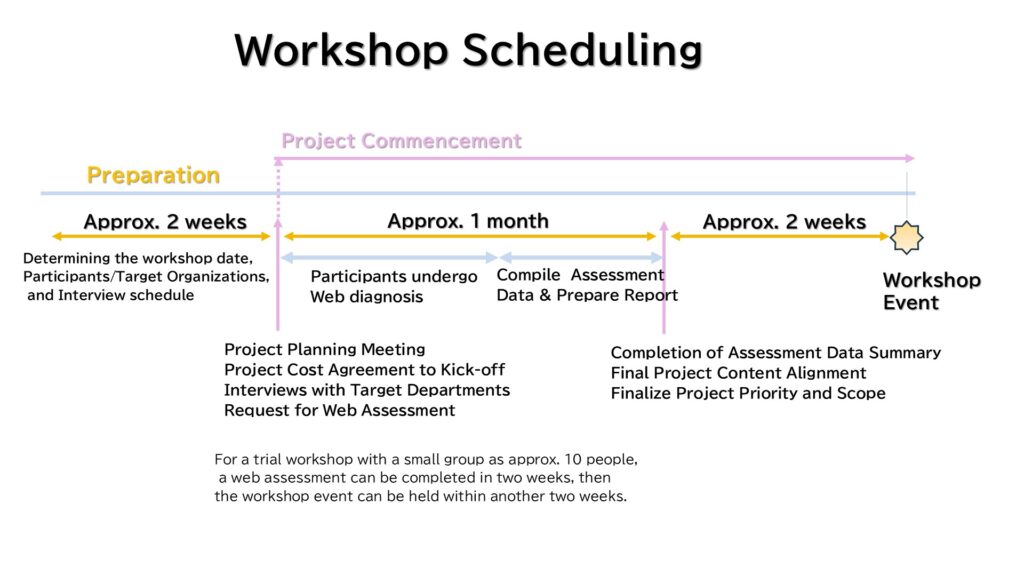
The workshop event concludes over two days. However, the guidance provided to individuals and departments based on the data gathered there becomes established over the following years. Through re-evaluations accompanying organizational changes, it effectively strengthens employees and the organization.
MADOKA Training Course Implementation History
Domestic Security Systems Company
US-based Pharmaceutical Company
Domestic Pharmaceutical Contract Development Company
US-based Cosmetics Company
Domestic Electronics Manufacturing and Sales Company
Domestic Electrical Equipment Trading Company
US-based Electronic Components Company
German Pharmaceutical Company